Crew Resource Intelligent Platform
Crew Scheduling
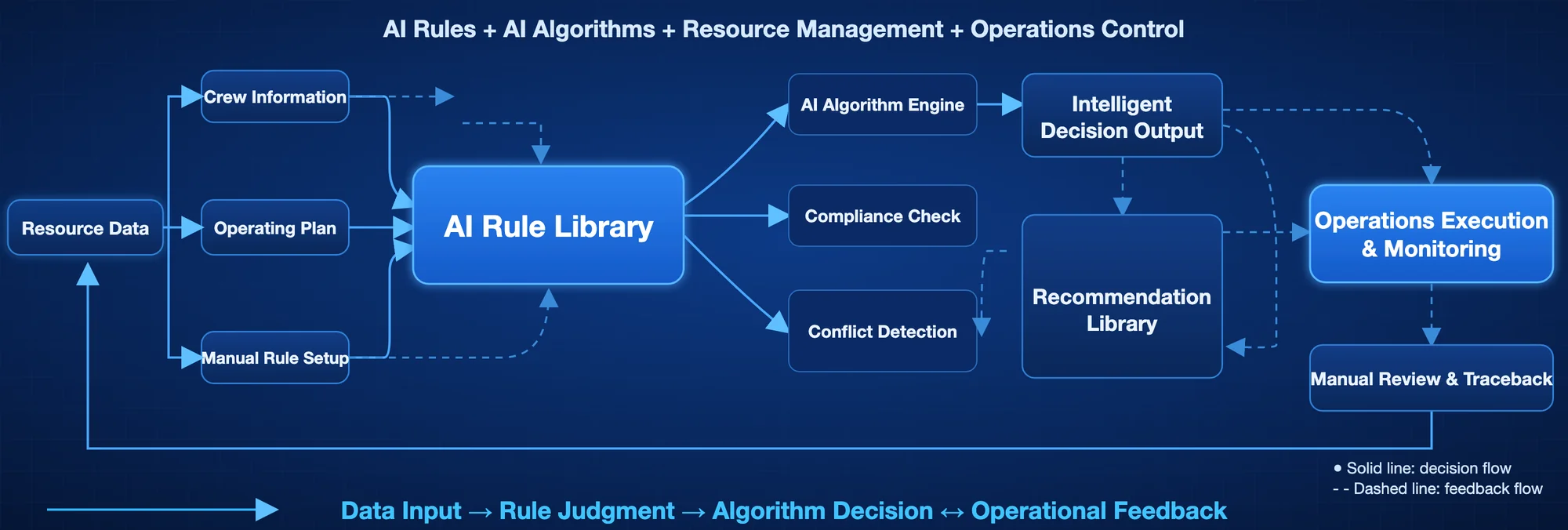
ZDH's Crew Resource Intelligent Platform is built to unify rule management, automated rostering and real-time operational monitoring for airline flight crew. The platform manages hundreds of scheduling constraints — from regulatory flight-time and rest limitations to company-specific pairing rules — with every rule traceable back to its governing manual or regulation, version and effective date. A next-generation AI scheduling engine evaluates the cascading impact of every crew assignment across the roster, dramatically compressing planning time while keeping every plan compliant. Real-time dashboards, dynamic risk monitoring and sandbox simulation give crew planners the visibility and foresight to keep operations compliant, resilient and cost-efficient.
Core Functions
Eight integrated capabilities powering end-to-end crew resource management.
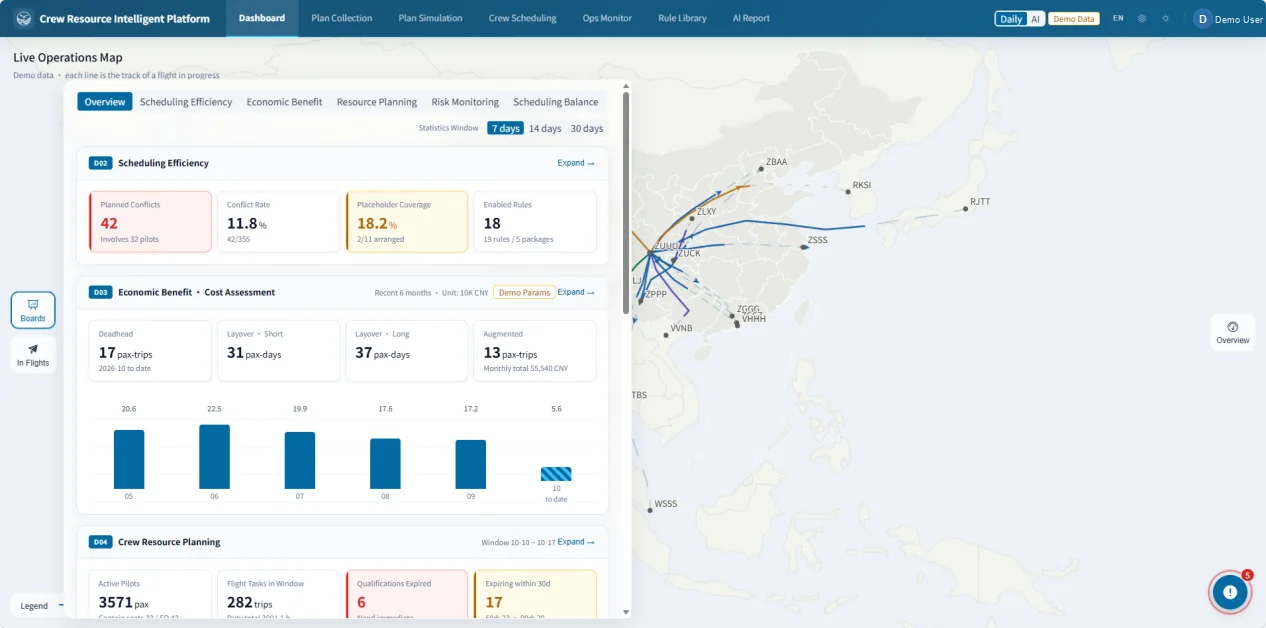
Real-Time Operations Cockpit
Configurable Scheduling Rules
Regulation-Traceable Rule Library
AI Rule Assistant (Natural-Language Q&A)
AI Scheduling Engine
Crew Pairing & Gantt Workbench
Dynamic Risk Monitoring & Recovery
Sandbox Simulation & What-If Analysis
Product Advantages
AI + Heuristic Automated Scheduling
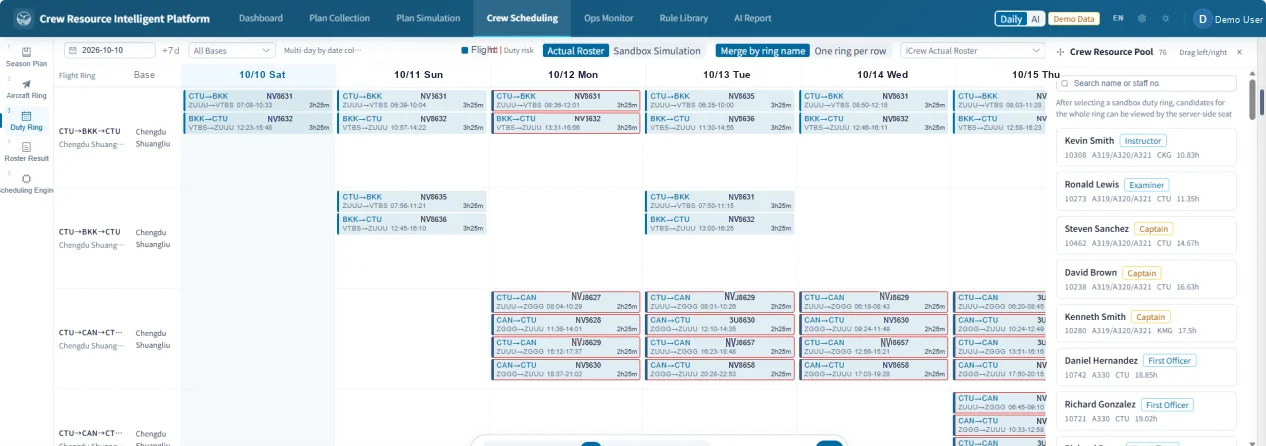
Breaking from the traditional sequential, pairing-by-pairing assignment model, the auto-scheduling engine combines AI with heuristic algorithms to evaluate the ripple effect of every crew assignment — the “butterfly effect” — across the entire roster, then dynamically rebalances the plan in response. A full month’s roster for 800 crew members that once took more than 13 hours to build by hand is now produced in under 1 hour, on a visual Gantt workbench that groups flights into crew-pairing rings and flags scheduling exceptions as they arise. The engine is developed by ZDH’s in-house team of mathematics PhDs, AI specialists and senior software engineers.
Rule-Grounded, Auditable AI Assistant
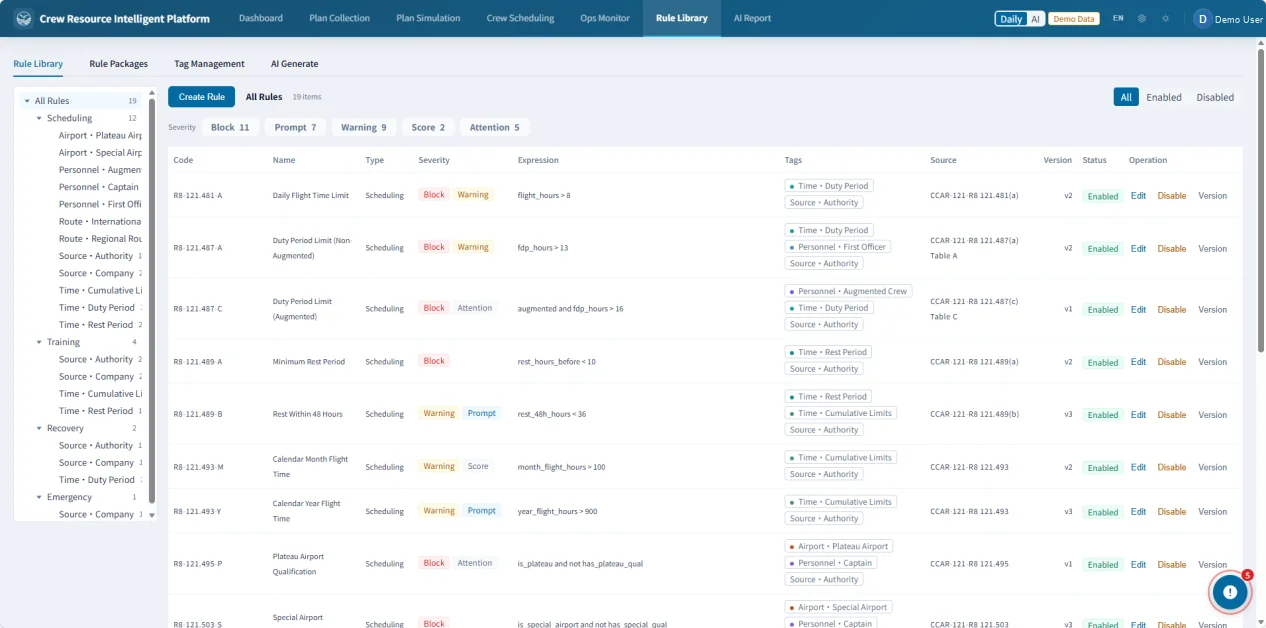
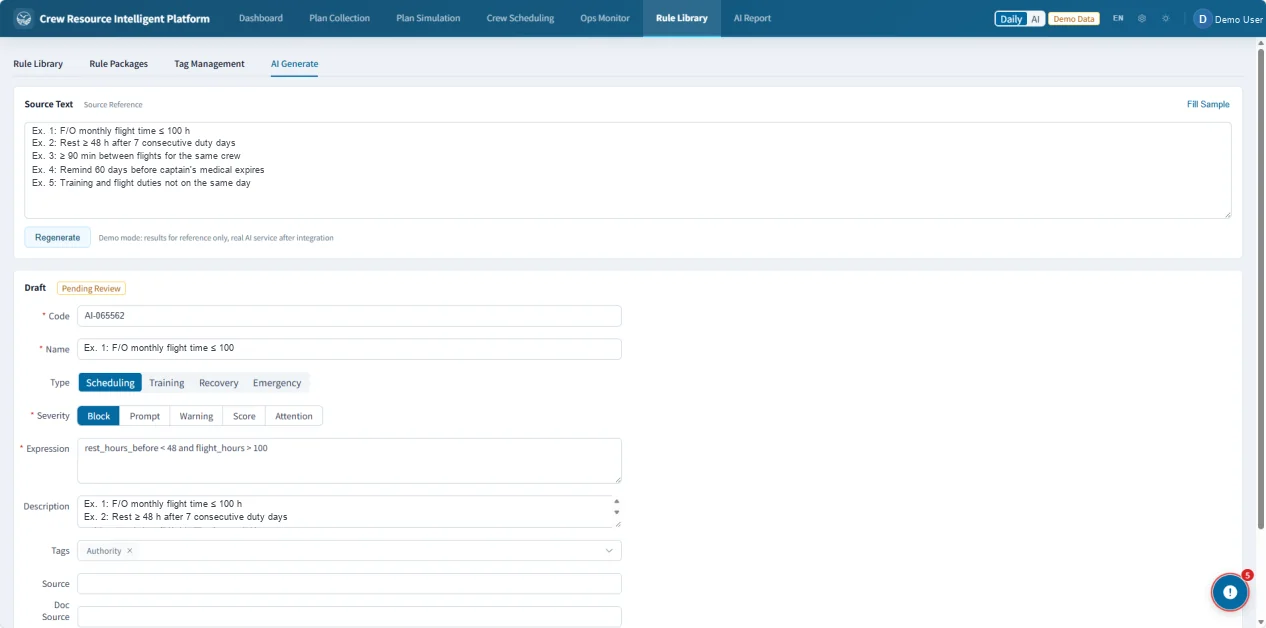
Every one of the platform’s 390+ scheduling rules — covering personnel qualifications, crew pairing, plateau-airport requirements, international single-pilot operations and more — is mapped to its source regulation or company manual, complete with version number and effective dates. An integrated AI assistant answers natural-language questions about any rule and returns its supporting citation, so every scheduling decision remains fully traceable and audit-ready. Regulatory coverage supports CAAC, FAA, EASA and other multilingual, multi-jurisdiction requirements.
Proactive Risk Monitoring & Recovery
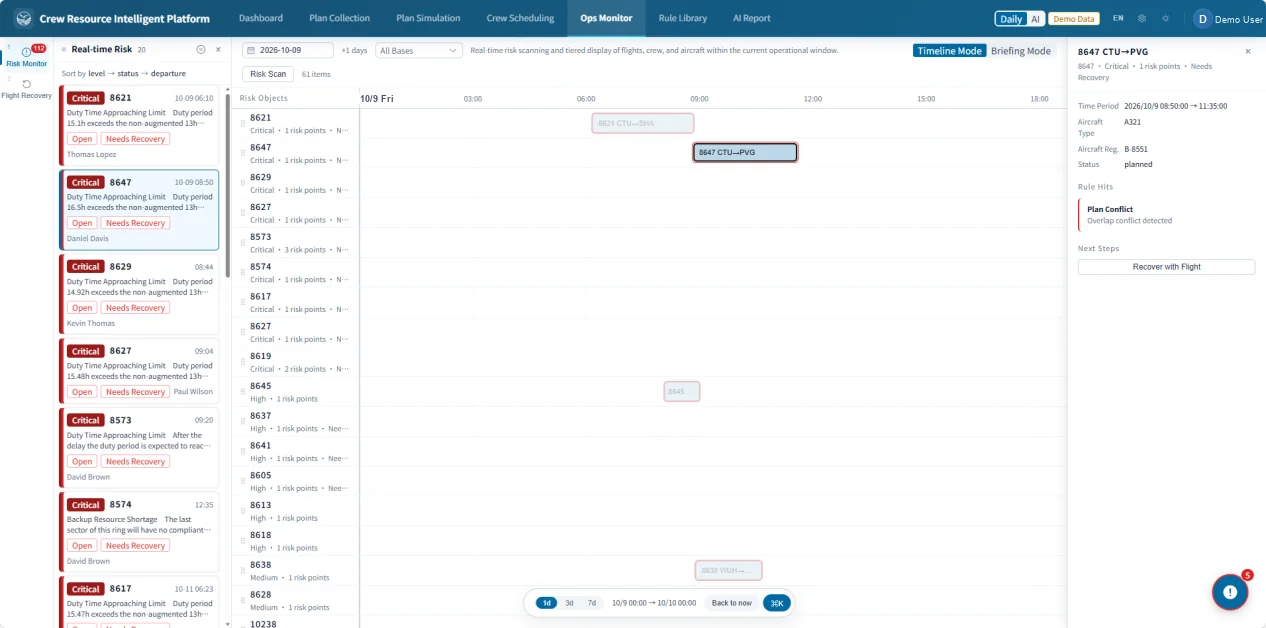
When a flight is delayed, cancelled or diverted, dynamic risk monitoring immediately assesses the impact on every affected crew member and surfaces it for review — flagging duty-time overruns, missing qualifications, insufficient rest and other exceptions before they disrupt operations. Planners can confirm and track a risk, or submit a recovery plan in a single click, closing the loop between disruption and resolution.
Sandbox Simulation & Scenario Planning
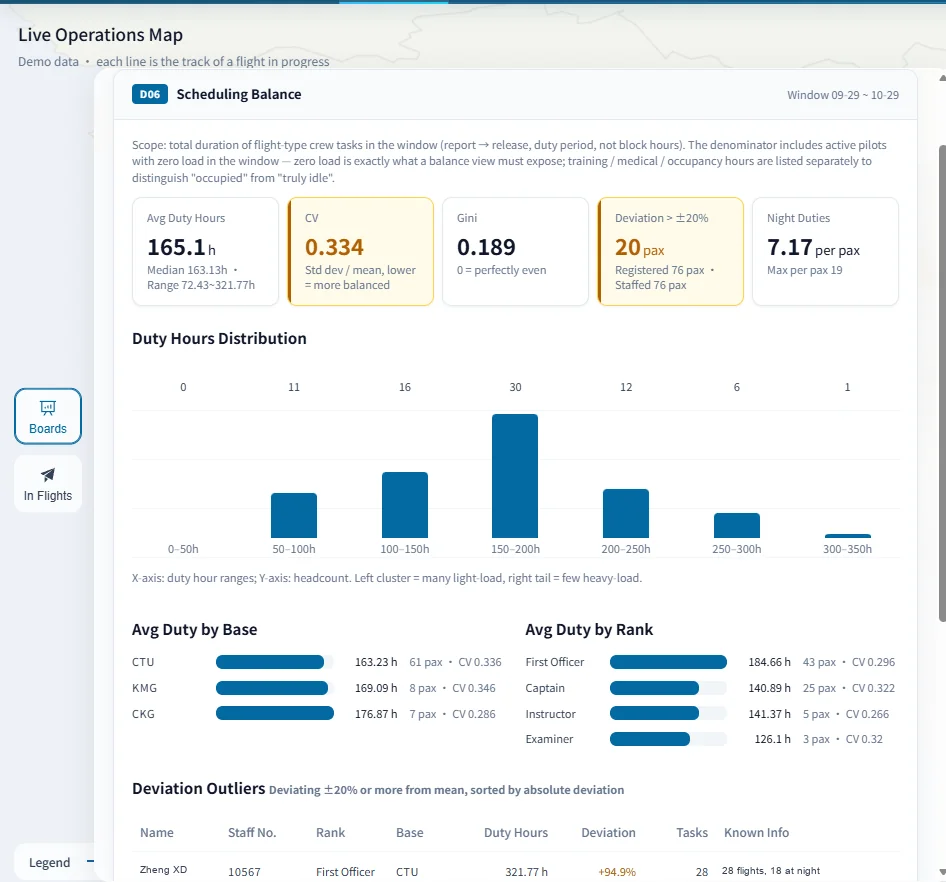
A dedicated sandbox lets crew planners simulate rosters against real historical operations or algorithm-generated scenarios and evaluate seasonal resource matching, quantifying the trade-offs — from long- versus short-term outstation postings and positioning and layover costs, to captain and first-officer hour balancing — before a plan goes live. Built-in analytics surface resource-matching trends, and the system proposes optimization suggestions for planners to act on.